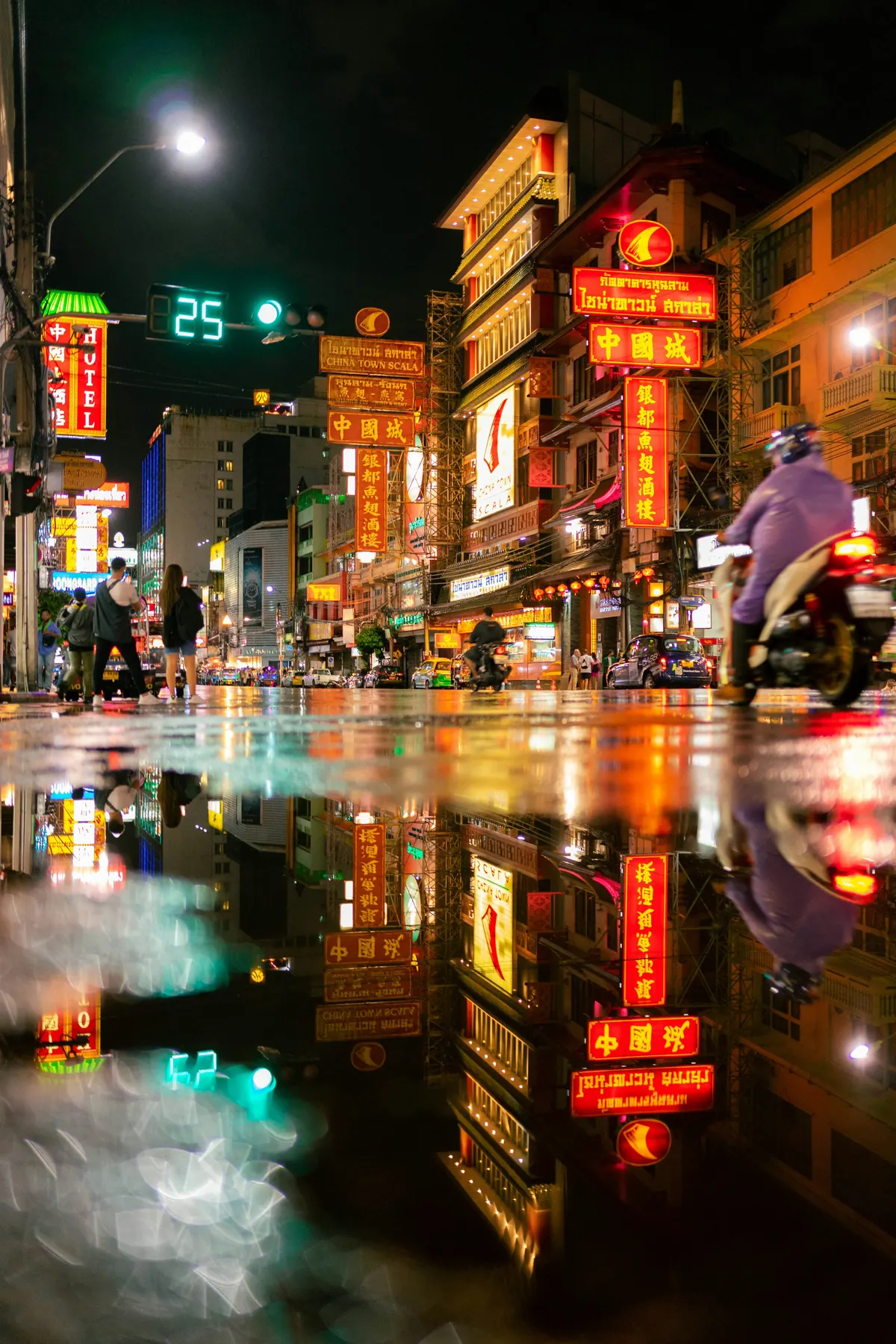
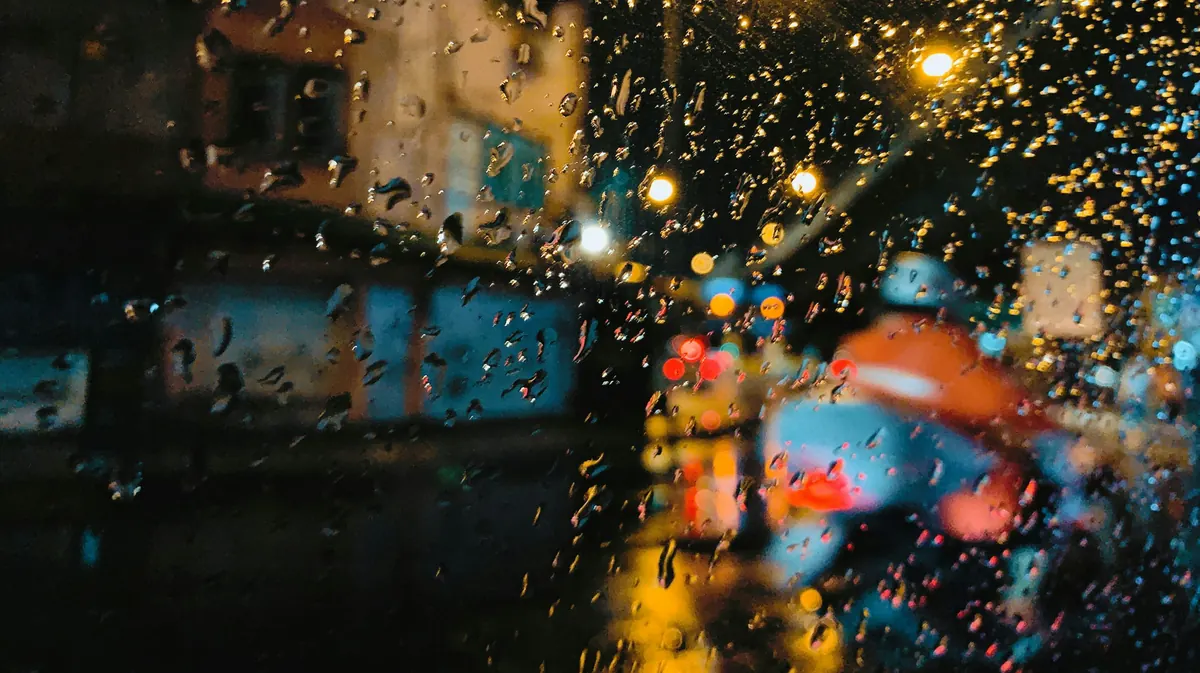
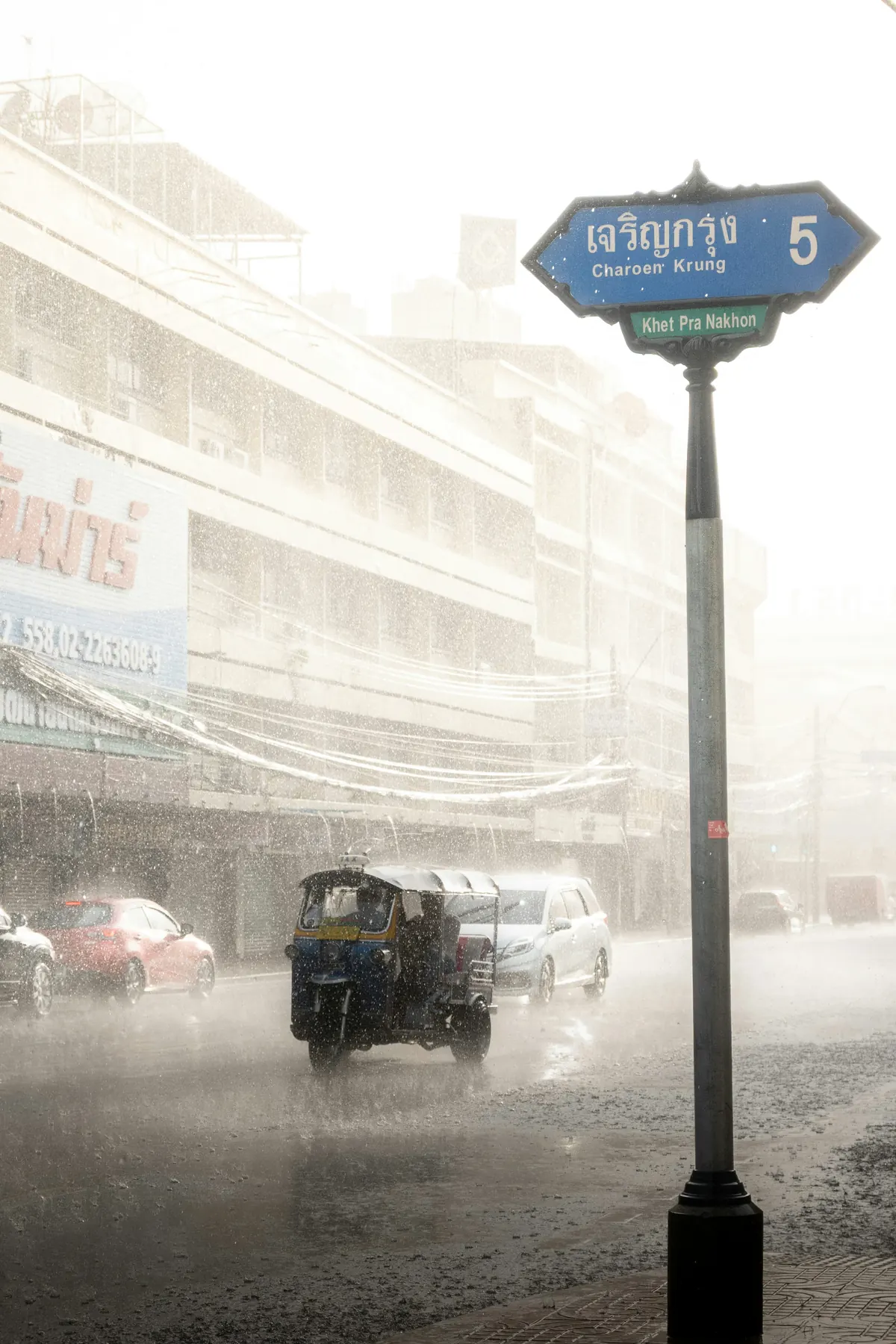
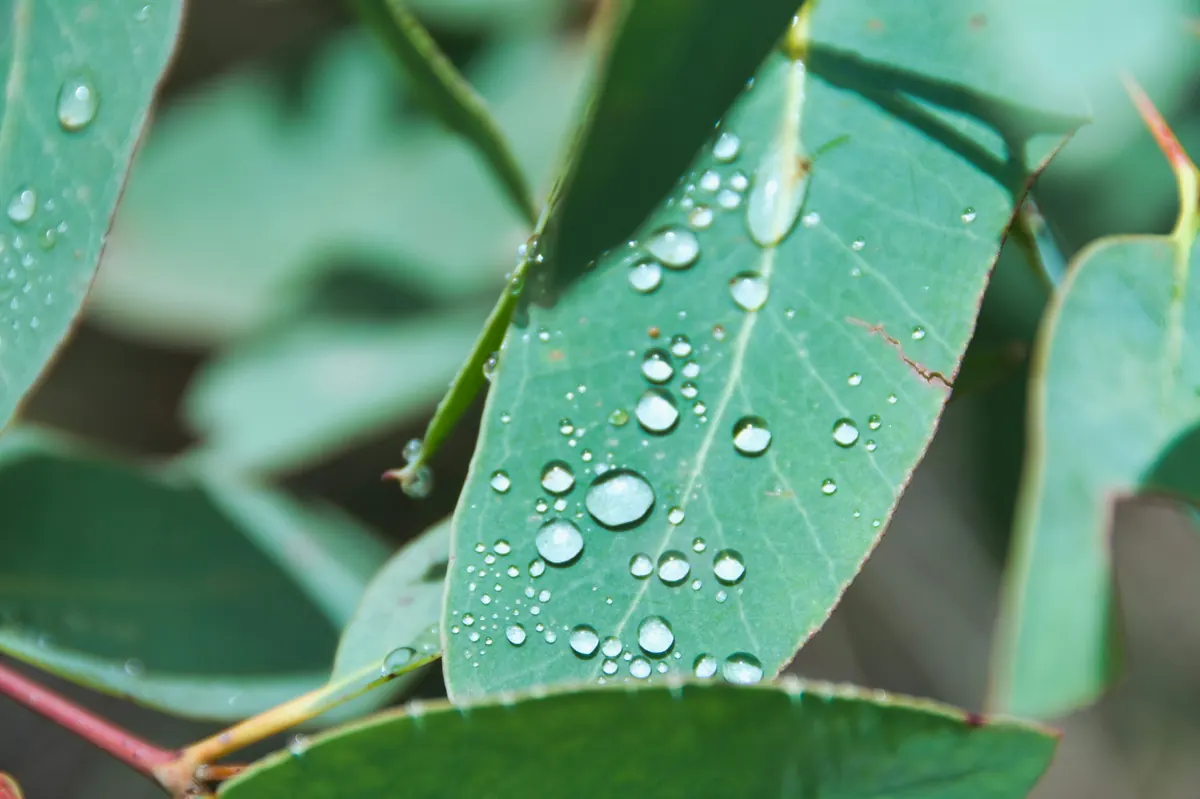
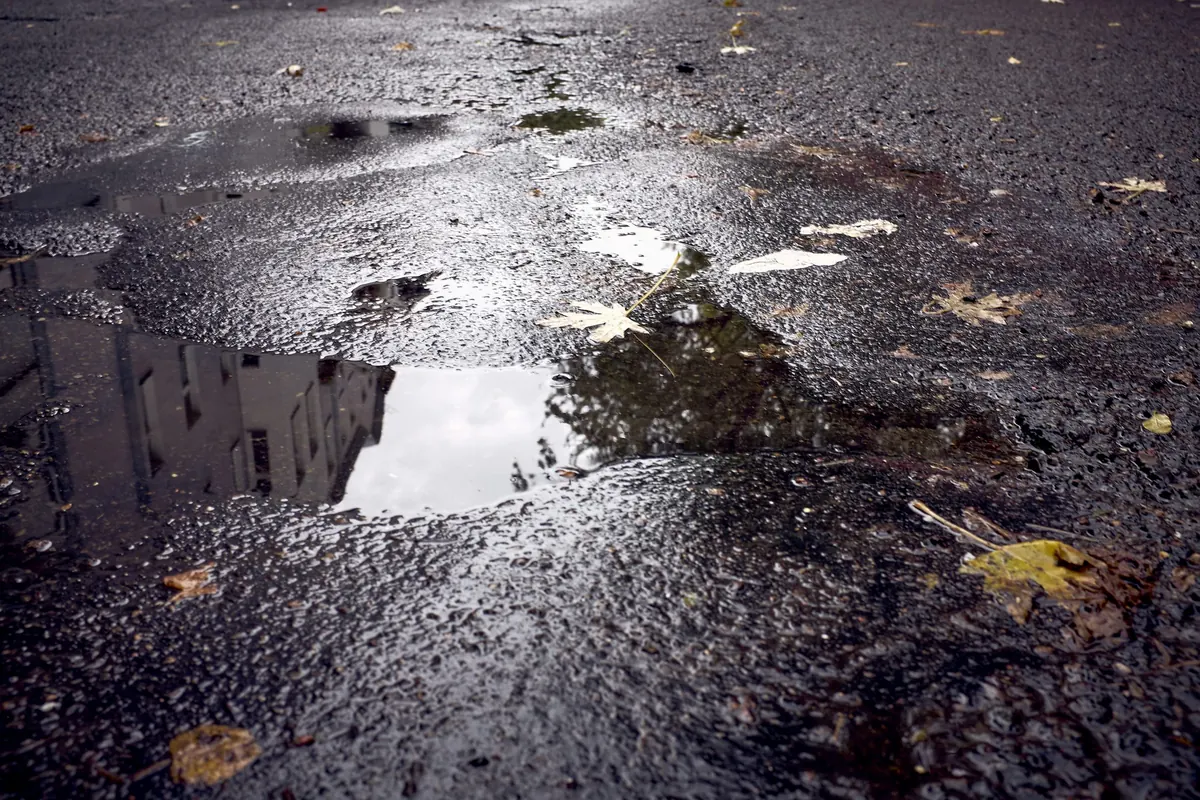
The rain has stopped, but the city has not quite returned to itself. A road holds the lights of nearby shops in its surface. Water collects along the kerb. A little wind moves through the trees, carrying a smell most of us would simply call rain.
Yet that smell is not necessarily the same beside a strip of exposed earth, in a planted courtyard, or on a pavement surrounded by buildings. Rain falls on surfaces with different histories. The places we walk through contain soil, plants, stone, concrete, fallen leaves, moving air and layers of personal association. What reaches our noses is not obliged to form one consistent scent.
So the more interesting question might be not “What does rain smell like?” but what are we smelling when rain changes a city? This is a reported science-and-culture essay, not an account of field sampling at a particular location. We can examine what research has established, consider what it might mean for urban environments, and keep the limits of that evidence visible.
A name for a familiar sensation
The word petrichor often appears when someone tries to explain the earthy smell associated with the first rain after a dry period. In 1964, Australian scientists Isabel Joy Bear and Richard Thomas published work on the characteristic odour given off by certain dry soils and rocks when moistened. The Commonwealth Scientific and Industrial Research Organisation, or CSIRO, recounts how their term drew on Greek roots associated with stone and the fluid of the gods in mythology.
The word is wonderfully compact. The experience, however, is not. Petrichor is a useful description of a particular earthy phenomenon, not the name of one ingredient present in every rainy street. An urban downpour may leave us noticing wet foliage, soil, traffic, damp materials or other features of the surrounding atmosphere. Grouping them together in everyday language does not make them chemically identical.
Another name frequently encountered in explanations is geosmin. It is a compound associated with the earthy odour produced through the activity of certain microorganisms, including those found in soil. Compounds associated with plants may contribute to the broader after-rain impression as well. The important distinction is between the words we use for an experience and the specific molecules that help create an odour. We should not confuse a familiar impression with a complete chemical inventory.
Picture a short walk through a city after a shower. Along one block are hard pavements, a concrete wall and a drain filled with wet leaves. Across the road stands a small tree in a patch of soil. A courtyard farther on might include shaded planting beds and old stone surfaces. The same weather has reached each place, yet those environments are not made of the same materials.
That contrast gives an urban smell story its shape. It would be tempting to assign a distinctive, definitive odour to every surface—to say that one type of concrete always smells a certain way, or that wet brick releases a measurable signature of its own. Without measuring the relevant compounds and environmental conditions, those claims would go too far. A photograph can establish that pavement is wet; it cannot show what invisible molecules were present in the air when the shutter opened.
What can reasonably be proposed is that surroundings help determine the sensory context. Exposed soil, living or decomposing plant matter, moisture, prior dry conditions and air movement are all sensible things to notice when comparing places. These are observations to guide curiosity, not findings from a controlled comparison of two streets. The difference between an evocative picture and scientific proof is worth protecting.
When a raindrop meets the ground
If some of the substances associated with an earthy smell begin in soil, how might anything from that soil reach the air? Young Soo Joung and Cullen R. Buie explored a piece of this puzzle in research published in Nature Communications in 2015. Their experiments investigated what happens when drops strike wettable, porous materials, including different types of soil.
Using high-speed imaging, the researchers observed tiny bubbles forming at the contact point. As the bubbles moved and burst, small aerosols could be released into the surrounding air. In certain experimental conditions, those droplets could carry material from the surface. The work offered a plausible physical mechanism linking raindrop impact with the movement of material from the ground to the atmosphere.
It is not a license to say that every wet city surface behaves this way. Surface porosity, wetting properties and impact conditions matter. The researchers also found that more intense rain did not automatically produce more of these aerosols: under conditions they studied, lighter or moderate impacts could produce more than heavy ones. Their result gives us a mechanism to consider, not a universal rule for all rain or all pavement.
A city after rain therefore becomes more interesting when seen as an exchange between surfaces and air. What we perceive as an odour can be connected to physical processes, yet the nose alone cannot identify every component. “That smells earthy” is a genuine sensory observation. “That proves this particular molecule is in the air at this concentration” is a different kind of statement, one that requires a measurement.
We also use the term rain smell across very different moments: before the first drop, during a shower, or as the pavement begins to dry. Those moments do not share identical atmospheric and environmental conditions.
Thailand's Science and Technology Knowledge Centre has published an explanation distinguishing some pre-rain impressions that may involve ozone from the earthy smell often discussed in relation to petrichor and geosmin. The distinction is useful, but not a reliable weather-prediction method. It does not mean everyone smells ozone before a storm, or that we can confirm a coming thunderstorm simply by noticing an unusual odour.
As an everyday exercise, it may be more illuminating to ask when the smell appeared. Was the wind building before rainfall? Were you beside a planted verge or a built-up intersection? Was the ground dry earlier in the day? Had the rain already passed? The questions help describe the circumstances of an experience. Turning the answers into scientific claims about the air would require appropriate instruments and a study design.
In dense urban areas, surroundings can change significantly within a short distance. That does not make one neighbourhood intrinsically cleaner, safer or more fragrant than another. A pleasant smell is not a proxy for good air quality, just as a photograph of fresh-looking wet leaves cannot establish the health of the atmosphere around them.
The chemistry and physics of after-rain smells are only part of the story. There is also the person who notices them. One reader may associate wet earth with a garden visited in childhood; another may think of the route home from school, or a journey they would rather forget. Someone else may feel nothing remarkable at all.
Research has shown that odours can serve as cues for autobiographical memory. But the popular idea that all smell-linked memories are necessarily older or more emotionally powerful than memories triggered by other senses is too simple. A 2022 study published in Acta Psychologica found that, in its research contexts, memories associated with odours were not inevitably older or more emotional than memories associated primarily with other sensory modes. The conditions under which memories are retrieved can shape how the results appear.
That nuance makes a more generous editorial story. We need not insist that the smell of rain is universally calming or comforting. If it returns someone to a meaningful moment, that significance belongs to their experience. If a damp street instead makes someone uncomfortable, that perception is real too. The same environmental cue can become different personal stories without either person being mistaken.
In this sense, a city's smellscape is not just a list of substances. It is an encounter between what is present and the history of the person who walks through it. Science helps us describe mechanisms; it does not have to flatten individual experience into one approved reaction.
Next time a shower ends, try a modest experiment of attention rather than a laboratory experiment. Notice the place you are standing. Is there exposed ground nearby? Wet foliage? A narrow street that channels the wind, or a more open area? Did you notice an odour while rain was falling, or only as it eased? If you move to another part of the neighbourhood, does your impression change?
These questions are not designed to identify a city's “best” scent. They simply slow down a familiar moment. They may reveal how much of everyday urban life we usually experience through images and sound while leaving smell almost unnamed. They also remind us to keep perception separate from measurement: none of these observations can establish pollutant concentrations or certify that the surrounding air is safe.
The answer to what a city smells like after rain may therefore never be a single beautifully packaged phrase. There are the compounds scientists study, the tiny exchanges between water and ground, the plants and materials around us, and the meanings we bring along. A city has more than one surface, more than one history, and more than one way of being perceived.
Perhaps the next time we notice that familiar after-rain smell, we can resist naming it too quickly. We might find that the ordinary space between a drain, a tree and a wet pavement has more to tell us than the word rain alone.
Editorial note: this feature synthesises research and cultural interpretation. It does not report a chemical sampling study or field survey of any particular city street.